


A browser that should have died long ago is paying a 4.5% dividend

Opera is paying 4.5% annually, growing 25% and has no debt. Yet its share price has fallen by half in a year and big funds are avoiding it. Who actually finances this dividend and what could break it?
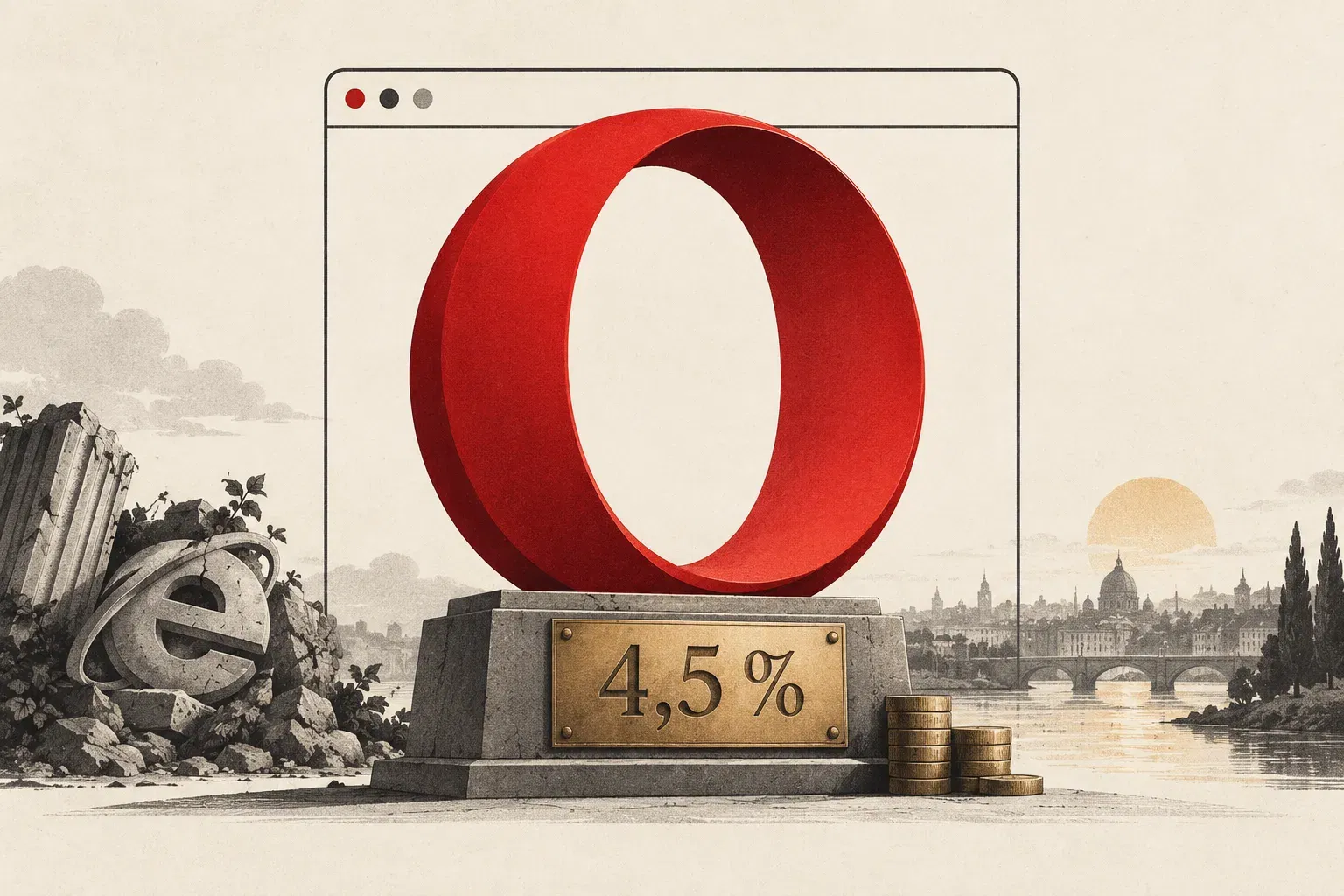
Key points
The 1995 browser that most experts predicted would die is now sending shareholders a 4.5% annual dividend.
The stock fell from $21 to $11.71 and back to $18, while the company twice raised its full-year outlook.
The dividend is not financed by the browser, but by two sources of money, one of which is in the hands of a single partner.
There is an item of $300.9 million on the balance sheet that the company values itself and no one verifies.
Three specific dates by the end of the year will show whether Opera is a cheap company or cheap for a reason.
A browser that survived its own funeral
When Google launched Chrome in 2008, most experts considered the fate of the small Oslo-based browser sealed. Opera $OPRA was founded in 1995 and was not supposed to have a chance against a company that preinstalls its own browser on billions of Android phones.
But something "went wrong". Opera did not die. Today it has 288 million monthly active users, revenue grew 25% last quarter, and twice a year it sends shareholders $0.40 per share. The July payout came to $35.6 million. At a price around $17.68, that is an annual dividend yield of roughly 4.5%, a number you would expect from a telecom or utility rather than a tech company growing at a double-digit pace.
Market capitalization is around $1.6 billion, or roughly CZK 33 billion.
And here the story gets interesting. The stock is still trading below last year's high of $21.06 from September 2025, and in February 2026 it fell as low as $11.71. Meanwhile, the company has twice raised its full-year outlook.
What does the market dislike so much about Opera when the numbers are going up?